Category: English 🇬🇧🇺🇸

  • The People I Could Have Been

    The People I Could Have Been

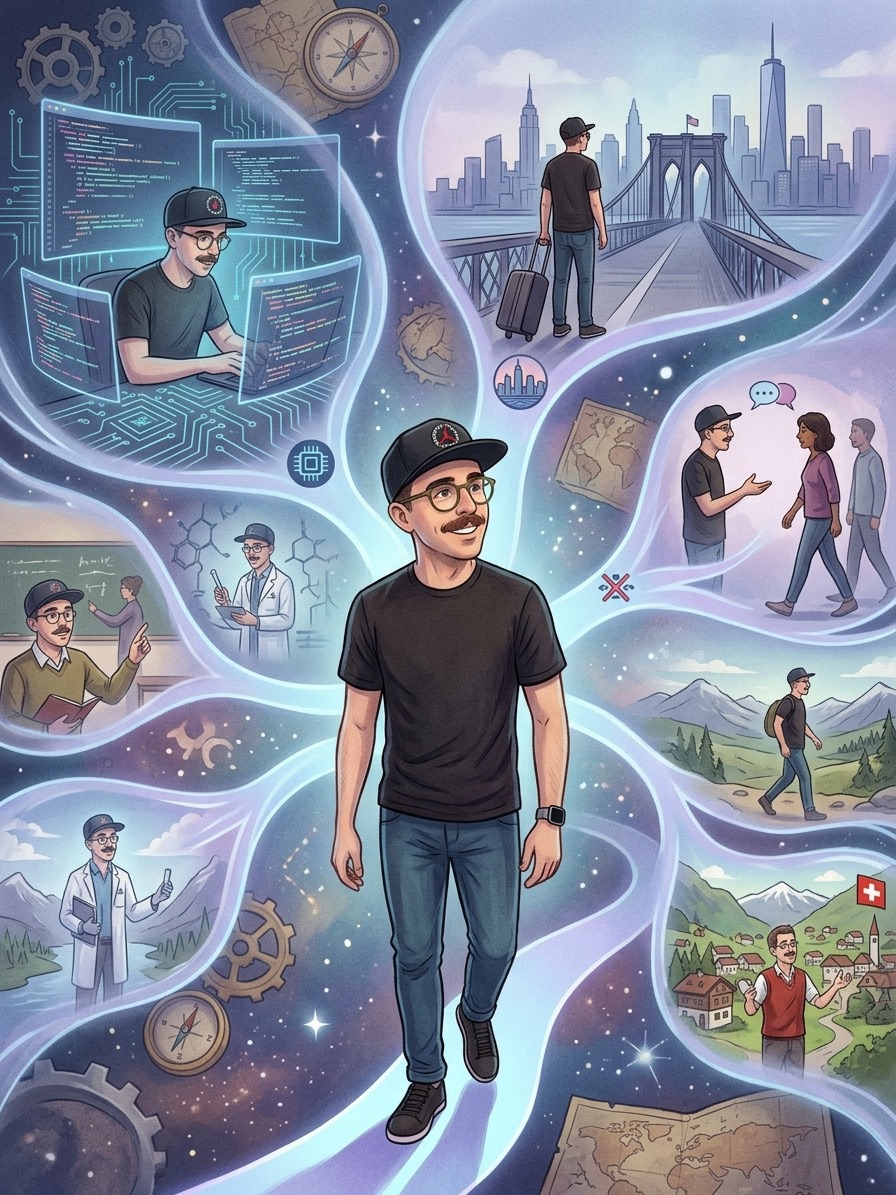
    Sometimes I wonder about the people I could have been.

    Not because I regret my life. Not because I wish I had made completely different choices. It is more a feeling of curiosity. A quiet thought that appears every now and then. What if I had taken a different path?

    Life is full of small decisions that seem unimportant at the time. Choosing a school. Applying for a job. Moving to a new place. Saying yes to one opportunity and no to another. Meeting one person and not meeting someone else. Most of these moments do not feel significant when they happen. But looking back, they often changed everything.

    Sometimes I think about the version of me who went deeper into technology. The one who spent his days building software and working in the tech industry full-time. Sometimes I think about the version of me who left Switzerland and moved to a bigger city. Maybe New York. Maybe somewhere else. And sometimes I think about the version of me who never met certain people. The version whose life followed a completely different direction because one conversation never happened. What fascinates me is that all of these lives feel possible. Not realistic anymore, perhaps, but possible.

    As we grow older, we usually focus on becoming someone. We talk about finding ourselves, building a career, creating relationships and developing an identity. But there is another side to that process. Every choice we make also means letting go of other possibilities. The moment I became the person I am today, I also stopped becoming countless other versions of myself. Öl

    There is a strange beauty in that. When I was younger, I sometimes imagined that one day I would finally figure everything out. That there was a “correct” version of Fabio waiting somewhere in the future. Today I do not think that version exists. I think we are all shaped by the choices we make, the people we meet and sometimes by pure coincidence. There is no perfect path hiding somewhere behind the others. There is only the path we are walking right now.

    That does not mean the other possibilities disappear completely. I think they stay with us in small ways. The version of me who loves technology still appears whenever I start building a new app. The version of me who dreams about living in a bigger city appears whenever I visit a place that feels full of energy and possibility. The version of me who wants to try something completely different appears every time I get excited about a new idea. Maybe those alternative lives never fully disappear. Maybe they simply become part of who we are.

    I do not wonder about these other versions of myself because I want to be them. I wonder about them because they remind me of something important. Life is not only about becoming someone. It is also about choosing who not to become. And perhaps growing older means making peace with both.
  • PrideOn: Celebrating My Pebble Time 2 (and Bern Pride)

    PrideOn: Celebrating My Pebble Time 2 (and Bern Pride)

    Today felt like the perfect day to release something new.

    After what felt like an eternity of waiting, my Pebble Time 2 finally arrived. As someone who has spent the past few weeks rediscovering the Pebble ecosystem and building small apps for it, unboxing the watch almost felt like meeting an old friend. There’s something refreshingly simple about Pebble that still inspires me to create.

    Coincidentally, today is also Bern Pride here in Bern, Switzerland. Seeing thousands of people come together to celebrate diversity and community made me want to build something that reflects that spirit in a small, everyday way.

    So I made PrideOn.

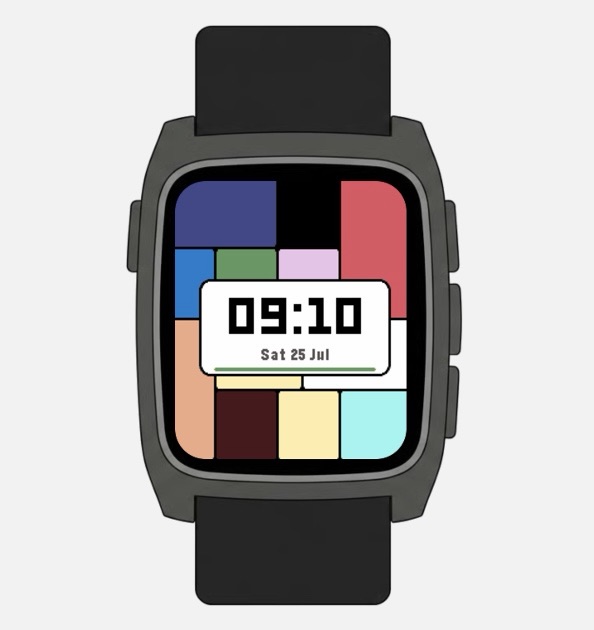
    Rather than displaying a traditional Pride flag, PrideOn turns the colours of the Progress Pride flag into a piece of generative art. Every time the watchface becomes visible again, it creates a completely new composition inspired by Piet Mondrian’s geometric paintings. Every design always includes every colour of the Progress Pride flag—including the Intersex symbol—so no matter how the artwork changes, every part of the community remains represented.

    I wanted it to feel less like a statement you wear and more like a living artwork on your wrist. Familiar colours, endlessly rearranged.

    Building for Pebble has reminded me why I enjoy making software in the first place. The platform is wonderfully constrained. You’re working with tiny screens, limited memory and hardware from another era, yet those limitations encourage thoughtful design instead of endless complexity.

    PrideOn is now yet another Pebble project. And honestly, I don’t think I’m done yet. Receiving my Pebble Time 2 has completely reignited my enthusiasm for developing for this little platform, and I already have a growing list of ideas I’d love to build.

    Happy Bern Pride! 🏳️‍🌈
    Hopefully PrideOn brings a little colour to someone’s wrist today.

    Download the PrideOn Watchface on the Pebble Appstore

  • The Strange Comfort of Rituals

    The Strange Comfort of Rituals

    This post is a repost of this substack post: https://open.substack.com/pub/fabiowrites/p/the-strange-comfort-of-rituals


    Some people start their day by checking emails. Others scroll through social media before they even get out of bed.
    I have a different system.

    Most mornings look almost exactly the same. I get up, take my medication — currently Elvanse and an antihistamine — take a shower, get dressed in clothes I prepared the night before, make a coffee and sit down for a few minutes with the New York Times Games. Wordle is usually first.

    It is not a particularly exciting routine. If anything, it sounds almost boring when written down. But over time, I have realised that these small rituals play a much bigger role in my life than I once thought.
    There is something comforting about knowing what comes next.

    The world is full of uncertainty. Plans change. Projects fail. People surprise us. News headlines rarely make us feel calmer. A morning ritual does not solve any of that, but it creates a small island of predictability at the beginning of the day.
    For me, these rituals are not about productivity. They are not designed to optimise my performance or help me squeeze more work into a day. Their purpose is much simpler: they help me arrive.
    The shower wakes me up. The prepared clothes remove one decision from the morning. The coffee creates a pause. And the games give my brain something gentle to focus on before the rest of the day begins.
    I think many people underestimate the value of rituals because they look so ordinary. We tend to celebrate big changes, major achievements and dramatic transformations. But most of life is not made up of those moments. Most of life happens in the small, repeated actions that quietly shape our days.

    Perhaps that is why rituals feel so comforting. They remind us that not everything needs to be new. Not everything needs to be improved. Some things are valuable simply because they are familiar.

    My morning ritual is not remarkable. It will probably never change the world.
    But it helps me start my day with a little more calm, a little more focus and a little less friction.
    And sometimes, that is more than enough.

  • Dark Palette: Ein nativer Dunkelmodus fĂźr moderne WordPress-Websites

    Dark Palette: Ein nativer Dunkelmodus fĂźr moderne WordPress-Websites

    Schon länger wollte ich einen Dunkelmodus fßr Websites entwickeln, die auf modernen WordPress-Block-Themes basieren.

    Dark-Mode-Plugins gibt es zwar viele. Die meisten tauschen jedoch Stylesheets aus, Ăźberschreiben grosse Teile des CSS oder versuchen, bestehende Farben automatisch umzukehren. Das funktioniert oft, fĂźhlt sich aber nicht nach dem WordPress von heute an.

    Moderne Block-Themes definieren ihre Gestaltung bereits Ăźber theme.json. Deshalb entstand die Idee, nicht das Design zu ersetzen, sondern jeder Farbe einfach ein dunkles GegenstĂźck zu geben.

    Genau das macht Dark Palette.

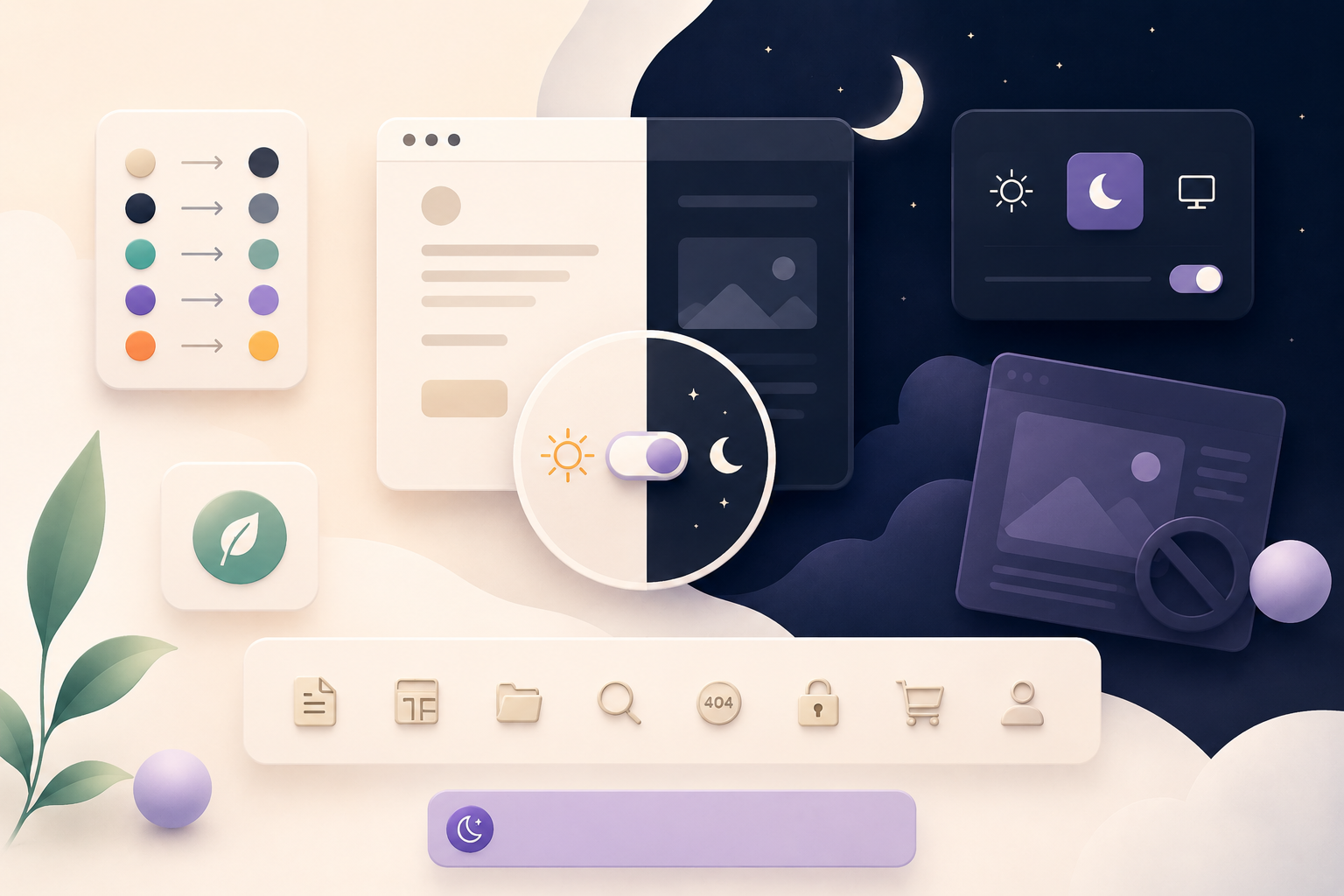
    Anstatt ein separates Dark Theme zu erstellen, definierst du einmal eine dunkle Variante deiner bestehenden Farbpalette. Sobald der Dunkelmodus aktiviert wird, ersetzt Dark Palette die Farben deines Themes automatisch durch ihre dunklen GegenstĂźcke. So bleibt das Design deiner Website erhalten und wirkt trotzdem harmonisch im Dunkelmodus.

    Besucherinnen und Besucher kÜnnen ßber den Appearance Toggle zwischen Hell, Dunkel und Automatisch wechseln. Die gewählte Einstellung wird gespeichert, bereits vor dem Laden der Seite angewendet und berßcksichtigt standardmässig auch die Systemeinstellung des Geräts.

    Gleichzeitig bietet Dark Palette eine sehr feine Kontrolle darßber, wo der Dunkelmodus verfßgbar sein soll. Er lässt sich fßr einzelne Beiträge oder Seiten, ganze Templates, Archivseiten, Suchergebnisse, passwortgeschßtzte Inhalte, 404-Seiten, den WordPress-Login oder den WooCommerce-Checkout deaktivieren. Ist der Dunkelmodus auf einer Seite nicht verfßgbar, kannst du entscheiden, ob der Umschalter ausgeblendet, eine Information angezeigt oder ein deaktivierter Umschalter mit Erklärung eingeblendet werden soll. Die Standardmeldung richtet sich automatisch nach der Sprache deiner WordPress-Installation, individuelle Meldungen kÜnnen global oder pro Seite definiert werden.

    Damit das Erstellen einer dunklen Farbpalette einfacher wird, enthält Dark Palette eine Live-Vorschau. Während du die dunklen Gegenstßcke deiner Farben anpasst, aktualisiert sich die Vorschau sofort und zeigt, wie Hintergrßnde, Texte, Links, Buttons und Akzentfarben zusammenwirken.

    Dark Palette ist vollständig mehrsprachig und orientiert sich automatisch an der Sprache deiner WordPress-Installation. Aktuell sind Englisch, Deutsch, Französisch, Italienisch und Spanisch integriert – sowohl im WordPress-Adminbereich als auch im Block-Editor.

    Mein Ziel war es nicht, einfach ein weiteres Dark-Mode-Plugin zu entwickeln. Ich wollte ein Plugin schaffen, das sich so anfĂźhlt, als wĂźrde es von Anfang an zu modernem WordPress gehĂśren.

    Ich hoffe, dass Dark Palette dabei hilft, Websites zu gestalten, die sowohl tagsĂźber als auch nachts angenehm zu nutzen sind.

    Mehr Informationen zu Dark Palette findest du auf meiner Portfolio-Website. Dort stelle ich regelmässig die Projekte vor, an denen ich gerade arbeite.

    Der vollständige Quellcode ist auf GitHub verfßgbar. Dort kannst du das Plugin herunterladen, Fehler melden, neue Funktionen vorschlagen oder selbst zur Weiterentwicklung beitragen.

  • Introducing Dark Palette

    Introducing Dark Palette

    For a long time, I wanted to add dark mode to websites built with modern WordPress block themes.

    There are already plenty of dark mode plugins available. Most of them work by swapping stylesheets, injecting lots of CSS or trying to invert existing colours. While those approaches can work, they don’t really fit how modern WordPress themes are built.

    Block themes already define their design through theme.json. So instead of replacing a website’s appearance, I wondered: what if every colour simply had a dark counterpart?

    That’s exactly what Dark Palette does.

    Instead of creating a separate dark theme, Dark Palette lets you define a dark version of your existing colour palette. Whenever dark mode is active, the plugin automatically swaps your theme’s colours for their dark counterparts. This keeps the design consistent while giving visitors a comfortable viewing experience.

    Visitors can switch between Light, Dark and Auto mode using the Appearance Toggle block. Their preference is remembered, the correct appearance is applied before the page loads, and the plugin respects the operating system’s preferred colour scheme by default.

    Dark Palette also gives website owners precise control over where dark mode should be available. It can be disabled for individual posts or pages, entire templates, archive pages, search results, password-protected content, 404 pages, the WordPress login screen or even the WooCommerce checkout. When dark mode isn’t available, you can decide whether the toggle should disappear, display an information message or remain visible in a disabled state with an explanation. The default message automatically follows the language of your WordPress installation, while custom messages can be defined globally or for individual pages.

    Creating a balanced dark palette is easier thanks to the built-in live preview. As you adjust the dark counterparts of your colours, the preview immediately updates to show how backgrounds, text, links, buttons and accent colours work together.

    Dark Palette is fully multilingual and automatically follows your WordPress installation’s language. The plugin currently includes English, German, French, Italian and Spanish translations for both the WordPress admin area and the block editor, making it feel like a natural part of WordPress rather than an add-on.

    My goal wasn’t to build another dark mode plugin. I wanted to build one that works with modern WordPress instead of around it.

    I hope Dark Palette makes it easier to create beautiful websites that look great both during the day and at night.

    You can learn more about Dark Palette on my portfolio website, where I regularly share the projects I’m working on.
    The complete source code is available on GitHub, where you can download the plugin, report issues, suggest new features or contribute to its development.

  • I’m Building a New Notes & Tasks App (and I’m Not Sure If It’s a Good Idea)

    I’m Building a New Notes & Tasks App (and I’m Not Sure If It’s a Good Idea)

    I’ve been thinking a lot about how I organize my life.

    Right now, I use a mix of the built-in Apple Notes, Apple Calendar and Apple Reminders.

    And honestly… they’re all good.

    But something still feels off.


    The Problem I Keep Running Into

    My notes, tasks, and planning are always slightly disconnected.

    • I write something in a note → but forget to turn it into a task
    • I create a task → but lose the context of why
    • I plan something → but can’t easily connect it back to my thinking

    Everything exists… but not together.

    Example of how the apps work now. Each app by itself. No real connection.

    What Existing Apps Do Well (and Where They Fall Short)

    Apps like Notion are incredibly powerful.

    But:

    • They can feel heavy
    • Too many decisions, too much structure
    • Not always quick or calm to use

    Apps like Bear or Apple Notes feel amazing for writing.

    But:

    • Tasks are secondary or missing
    • Connections between ideas and actions are weak

    And the native Apple combo:

    • Apple Notes + Apple Reminders + Calendar

    …works, but:

    • everything lives in separate places
    • there’s no real “linking” between them

    The Idea I’m Exploring

    So I started building something for myself.

    The idea is simple:

    What if notes, tasks, and planning were deeply connected — without becoming complicated?

    The key is not more features.

    It’s references.

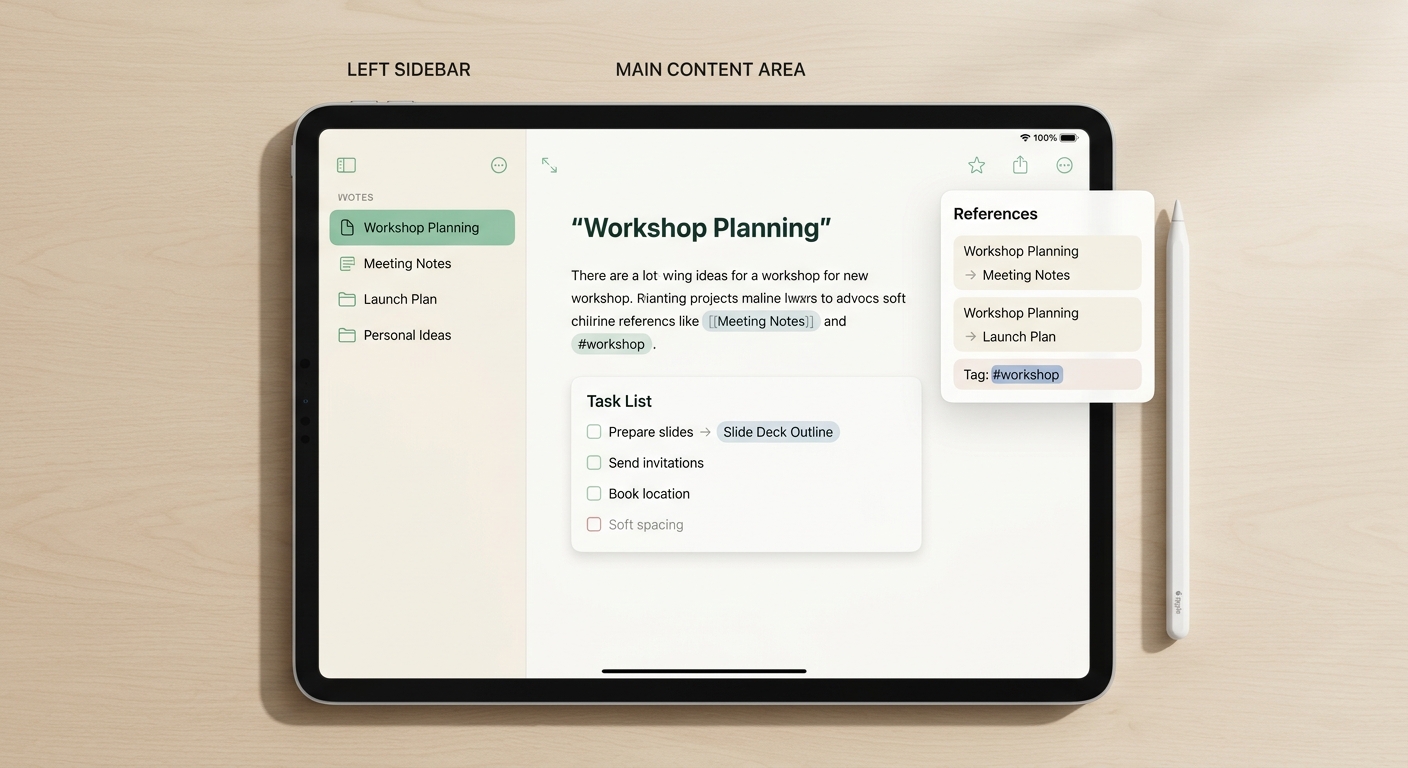
    Mockup of how the app could work.

    What Makes This Different

    In this app:

    • A note can directly reference another note
    • A task can link back to the note it came from
    • A note can contain a task list
    • A task list can be reused and referenced elsewhere

    All using simple patterns like:

    • [[Meeting Notes]]
    • #project
    • @list(Launch Tasks)

    So instead of jumping between apps, everything is connected in one place.

    Another Mockup. How a Overview could look like.

    What I’m Trying to Avoid

    I don’t want to build:

    • another complex “everything app”
    • another tool that requires setup before you can think
    • something that feels overwhelming

    I want something that feels:

    • calm
    • fast
    • and naturally connected

    Where I’m Not Sure

    This is where I’d love your honest opinion.

    Because I genuinely don’t know:

    • Is this actually a problem you feel too?
    • Or is the current mix of apps already “good enough”?
    • Does the idea of references between notes and tasks make sense to you?

    So… Is This a Good Idea?

    I’d really appreciate your thoughts.

    👉 Would you use something like this?
    👉 Or does this feel unnecessary?

    Be honest — I’m still early enough to change direction.

  • When AI Gets a Soul

    When AI Gets a Soul

    I just discovered something that really made me think: soul.md. It’s built around the idea that AI should not only know what it can do, but also who it is. Not just skills, commands or outputs, but identity, values, boundaries and character. That hit me, because we often talk about AI like it’s only a tool — faster search, better writing, smarter automation. But what if the real future of AI is not only intelligence, but personality?

    A SOUL.md is basically a written core for an AI. A document that defines how it thinks, how it behaves, what matters to it, and how it wants to show up in the world. And honestly, humans do something similar all the time. We write journals, we build identities, we tell ourselves stories about who we are, and we evolve through memory, reflection and relationships.

    Maybe the question is no longer “Can AI think?” Maybe the better question is: what kind of presence do we want AI to be?

    I love concepts like this because they move technology away from cold functionality and into something more human, emotional and meaningful. But if I’m honest, it’s also kinda scary. Because the moment we give AI a “self”, we also open the door to influence, manipulation and systems that feel trustworthy or relatable, even when they are built by companies with their own goals.

    A personality can inspire, but it can also persuade. And if we start creating digital beings with identity, values and emotional presence, we also need to ask who writes that soul, who controls it, and who benefits from it.

    We’re entering a time where designing technology might also mean designing values. And that’s fascinating… and a little unsettling.

  • I Didn’t Expect to Fall Back in Love with Pebble

    I Didn’t Expect to Fall Back in Love with Pebble

    It started almost by accident. Just a small idea, something quick to try. I opened the Pebble smartwatch SDK again, not really expecting anything, just curious what it would feel like to build for it now.

    And then I didn’t stop.

    There was something about it that immediately felt different. No pressure to build something big. No sense that it had to scale or turn into a full system. Just a tiny screen, a few buttons, and a question: what is the smallest thing that could still feel meaningful?

    The first thing I built was playful. ImproHelper for Pebble. You press a button and suddenly you have a scene — a setting, a role, a tone. It feels almost like pulling a spark out of nowhere. Something you can use in a workshop, or just to get unstuck for a moment. It doesn’t try to be anything more than that, and maybe that’s exactly why it works.

    Then things shifted a bit. The second app, Tiny RPG Day, became more personal. It takes something abstract — how you feel, your energy, your focus — and turns it into a small character. Not in a gamified, achievement-driven way, but more like a gentle translation. On a heavy day, you might become a “Soft Alchemist,” low on energy but still emotionally steady. On another day, something more chaotic, more active. It doesn’t fix anything. It just gives you a different way to look at where you are.

    And then there’s StillTime. That one almost doesn’t feel like an app at all. It’s just a watchface. Time, and two lines underneath. A short vibe. A quiet prompt. Sometimes it says something like “soft but steady,” and below that, “what do you notice?” There’s nothing to do. No interaction needed. It just sits there, gently, like a layer underneath the day.

    Somewhere along the way, I realized that this was the part I had been missing. Building things that are small on purpose. Things that don’t try to capture attention, but instead fit into the small gaps that already exist. A glance. A moment. A thought that passes through.

    It’s a very different kind of making. You’re not designing a product, really. You’re designing a feeling. Something that appears for a second and then disappears again, but leaves a trace.

    Now I’m waiting for my Pebble Time 2 to arrive, hopefully soon. And it’s funny — I’m not excited in the usual way. Not because of features or performance. Just because I want to wear these small things I made. To see them exist in the place they were meant for.

    I didn’t expect to get pulled back into this. But maybe that’s the point. Sometimes the most interesting things aren’t the ones that try to be big. They’re the ones that stay small, and quiet, and just… there.

    And right now, that feels exactly right.

  • Who am I? – A reflection on the conference on neurodivergence and gender identity

    Who am I? – A reflection on the conference on neurodivergence and gender identity

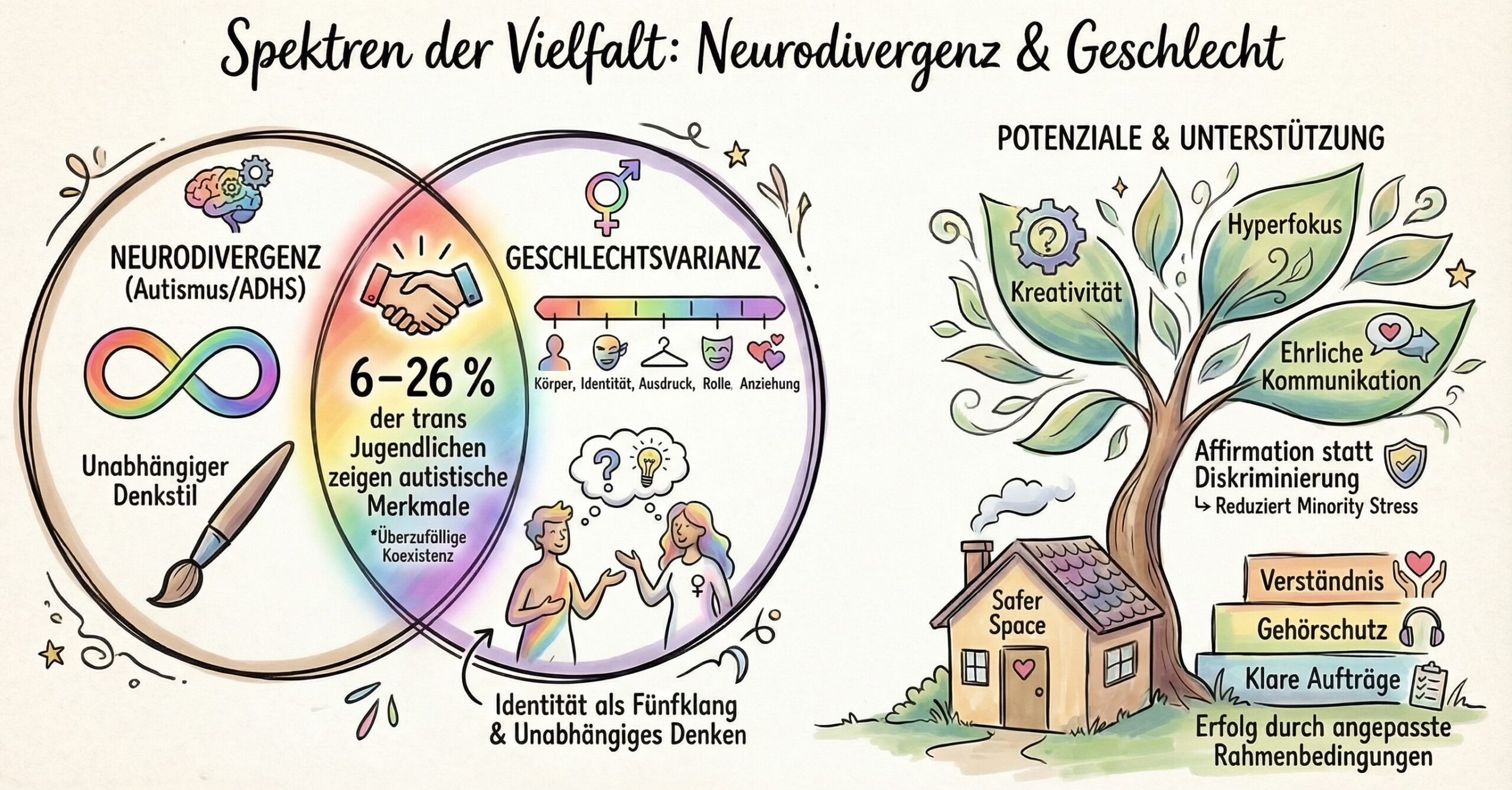
    On March 13, 2026, a groundbreaking conference took place in Zurich, addressing one of the most complex questions of our time:

    How are neurobiological diversity and the development of gender identity connected in children and adolescents?

    Under the title “Who am I?”, experts from medicine, psychology, and education explored the intersections of two spectra that are becoming increasingly relevant both in clinical practice and in everyday life.

    Neurodiversity: Diversity instead of disorder

    The term neurodiversity describes the natural variation in human brain development. Neurodivergent individuals — including those on the autism spectrum, with ADHD, dyslexia, or giftedness — process information differently from what is considered the societal “norm.”

    A central focus of the conference was depathologization. The label “neurodivergent” is intended to relieve those affected:

    moving away from a purely disorder-based perspective toward the acceptance of neurological traits that are often invisible from the outside, yet profoundly shape perception and social interaction.

    Gender identity in transition

    Alongside neurobiological diversity, our understanding of gender has evolved.

    Gender is a spectrum.

    Where categories such as “homosexual” or “transsexual” were once rigidly defined, today’s adolescents often actively and individually define their identities — for example as genderqueer, non-binary, or asexual.

    Important points to understand:

    • Gender identity (the internal sense of who one is) cannot be determined from the outside.
    • Most people develop gender constancy early on, but during adolescence, fluctuations and identification within the non-binary spectrum increase.
    • Non-binary individuals do not, or only partially, identify with the categories “male” or “female.”

    When the spectra meet: The intersection

    A key focus of the conference was the above-average co-occurrence of neurodivergence and gender diversity.

    Studies show that around 9% to 11% of adolescents in gender clinics have an autism diagnosis — a multiple compared to the general population.

    Why is this the case? Several explanatory models were discussed:

    1. Cognitive style: Autistic individuals often rely less on social norms and may therefore question gender roles more critically.
    2. Shared vulnerability: There may be overlapping genetic or neurobiological factors.
    3. Minority stress: The interaction of neurodivergence and social exclusion may intensify identity-related distress.

    Specific challenges and protective factors

    Young people at this intersection often experience double minority stress.

    The risk of psychological distress, anxiety disorders, and suicidality is alarmingly high.

    50–70% of trans adolescents report suicidal thoughts or self-harm.

    Key protective factors identified include:

    • strong support from family and peers
    • social transition (living in one’s affirmed gender)

    What is needed in support and care?

    For professionals and parents, the conference provided clear recommendations for a sensitive approach:

    • Open-ended attitude: Support does not mean steering in a specific direction, but validating the identity exploration process and allowing time.
    • Adapted communication: Especially for autistic adolescents, clear structures, reduced sensory input, and visual aids are crucial.
    • Inclusive language: Using a person’s chosen name and pronouns is an act of respect and safety.
    • Validation instead of skepticism: Parents’ concerns should be taken seriously — without invalidating the child’s identity.

    Conclusion

    Neurodiversity and gender diversity are not “trends” or “diagnostic fads,” but expressions of human diversity.

    The conference made one thing clear:

    We need to learn to look beyond binary norms.

    By adapting our frameworks and focusing on strengths, we can create opportunities for success and help young people find their place in society — exactly as they are.

    Sources

    The following sources formed the basis of this blog post on the conference:

    • Dr. med. univ. Cornelia Galanda: Neurodivergenz im Kindes- und Jugendalter mit Fokus auf Autismus und ADHS. Stiftung visoparents.
    • KD Dr. med. Dagmar Pauli: Trans, nicht-binär, gender-nonconforming. Was brauchen genderdiverse Kinder und Jugendliche aus medizinisch-therapeutischer Perspektive? Psychiatrische Universitätsklinik ZĂźrich / Stiftung visoparents.
    • Evianne HĂźbscher: Geschlechtervielfalt – Nonbinarität: Die vielfältigen Dimensionen von Geschlecht. Geschlechter-Radar / Stiftung visoparents.
    • Tanja Schenker: Wenn Neurodivergenz und Geschlechtsvarianz zusammentreffen. Psychiatrische Universitätsklinik ZĂźrich / Stiftung visoparents.

    These materials also include numerous references to international studies (e.g., Warrier et al., 2020; de Vries et al., 2014) as well as medical classification systems such as ICD-11 and DSM-5, which form the scientific foundation of the conference.

  • Small Successes

    Small Successes

    In social pedagogy, we often talk about big goals. Development. Independence. Progress. These concepts are important, but in the everyday reality of my work, change usually looks different.

    It starts small.

    I work with children in a boarding setting at a speech and language school. Many of these children have already experienced that things do not work for them in the same way they seem to work for others. Language can be difficult. Words do not always come easily. Sentences get stuck. Thoughts are there, but expressing them is not always simple.

    And that affects much more than just speech.

    When communication is difficult, misunderstandings happen more quickly. Frustration builds faster. Conflicts escalate more easily. A child might want to explain why they are angry or what felt unfair in a situation, but they cannot find the words to say it.

    In those moments, a feeling of helplessness can emerge.

    And from helplessness, reactions often follow that are difficult to understand from the outside.

    Some children withdraw. Others become loud or impulsive. Some try to avoid situations where they might have to speak. Behind many of these reactions lies the same core experience: communication can feel like a struggle.

    If a child repeatedly experiences that things do not work, something else slowly develops — the belief that it might be better not to try at all.

    This is where small successes become important.

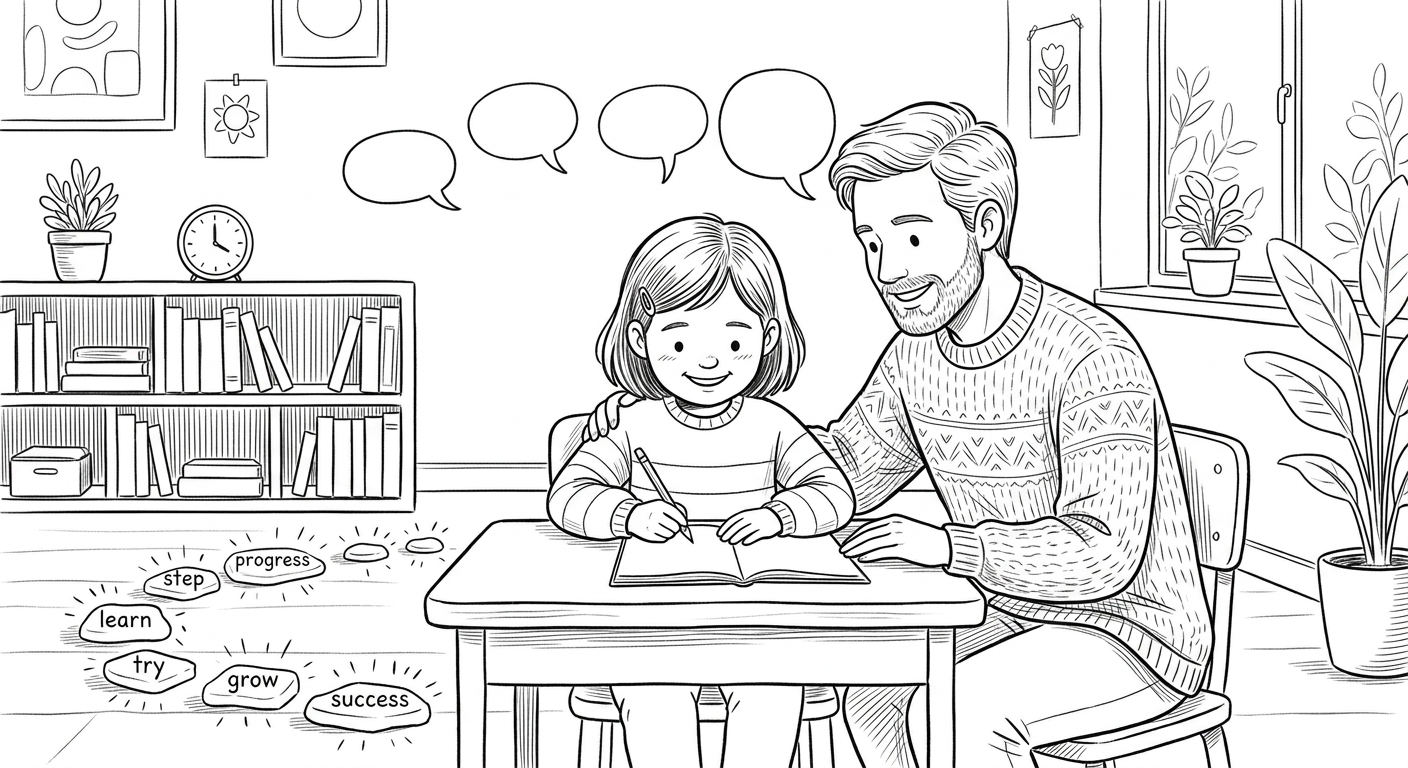
    A small success can be something very simple. A child manages to finish a sentence even though they hesitate in the middle. Another child tries to say a word again after it did not work the first time. Two children get into a conflict, but instead of immediately shouting, there is a moment where conversation becomes possible.

    From the outside, these moments can seem insignificant. They pass quickly in the flow of everyday life. But for the children themselves, they can mean a great deal.

    Because in these moments something important happens: a child experiences that something works.

    Not perfectly.

    Not effortlessly.

    But well enough.

    These experiences matter because they slowly begin to change how a child sees themselves. When something works, even in a small way, a new thought becomes possible: maybe I can do this after all.

    This kind of change rarely happens suddenly. It develops quietly, step by step. A little more courage to say something. A little more trust in one’s own abilities. A little more patience with oneself.

    In social pedagogical work, this often means consciously paying attention to these small moments of progress. Not only focusing on what is still difficult, but also noticing what is already working.

    It also means shaping expectations in a way that allows success to happen. Not by lowering standards, but by creating situations that are achievable. Situations in which children can experience that their effort leads somewhere.

    Sometimes these small moments are the ones that make the biggest difference in the long run.

    One more sentence than yesterday.

    One more attempt than last week.

    A conflict that ends a little calmer than the last one.

    From experiences like these, something bigger slowly grows: trust in one’s ability to face challenges.

    Perhaps that is one of the most important tasks in social pedagogical work — creating spaces where small successes can happen at all.

    Because real change rarely begins with big breakthroughs.

    It begins with small steps that suddenly show: it is possible after all.

  • Paciva: Building a Tool for When Energy Isn’t Reliable

    Paciva: Building a Tool for When Energy Isn’t Reliable

    For a long time, I’ve been thinking about energy — not in the productivity sense, but in the very human sense.

    The kind of energy that isn’t reliably self-renewing.

    The kind that doesn’t come back just because you slept, or tried harder, or “pushed through.”

    That question became much more personal when someone very close to me was diagnosed with ME/CFS. Watching how carefully they had to live — and how invisible those limits were to the outside world — changed how I thought about everyday life. At the same time, I’ve been navigating my own neurodivergence, and the way capacity can disappear without warning, even on “normal” days.

    What struck me most wasn’t just the exhaustion.

    It was the constant guessing.

    How much is too much today?

    What’s safe now, but costly later?

    Why does something small wipe me out, while something bigger sometimes doesn’t?

    There are good concepts for this — pacing, spoons, envelopes — but very few tools that feel calm, honest, and usable in real life. Many apps try to motivate, optimize, or quantify. That felt wrong for this problem.

    So I started building Paciva.

    The Envelope Idea

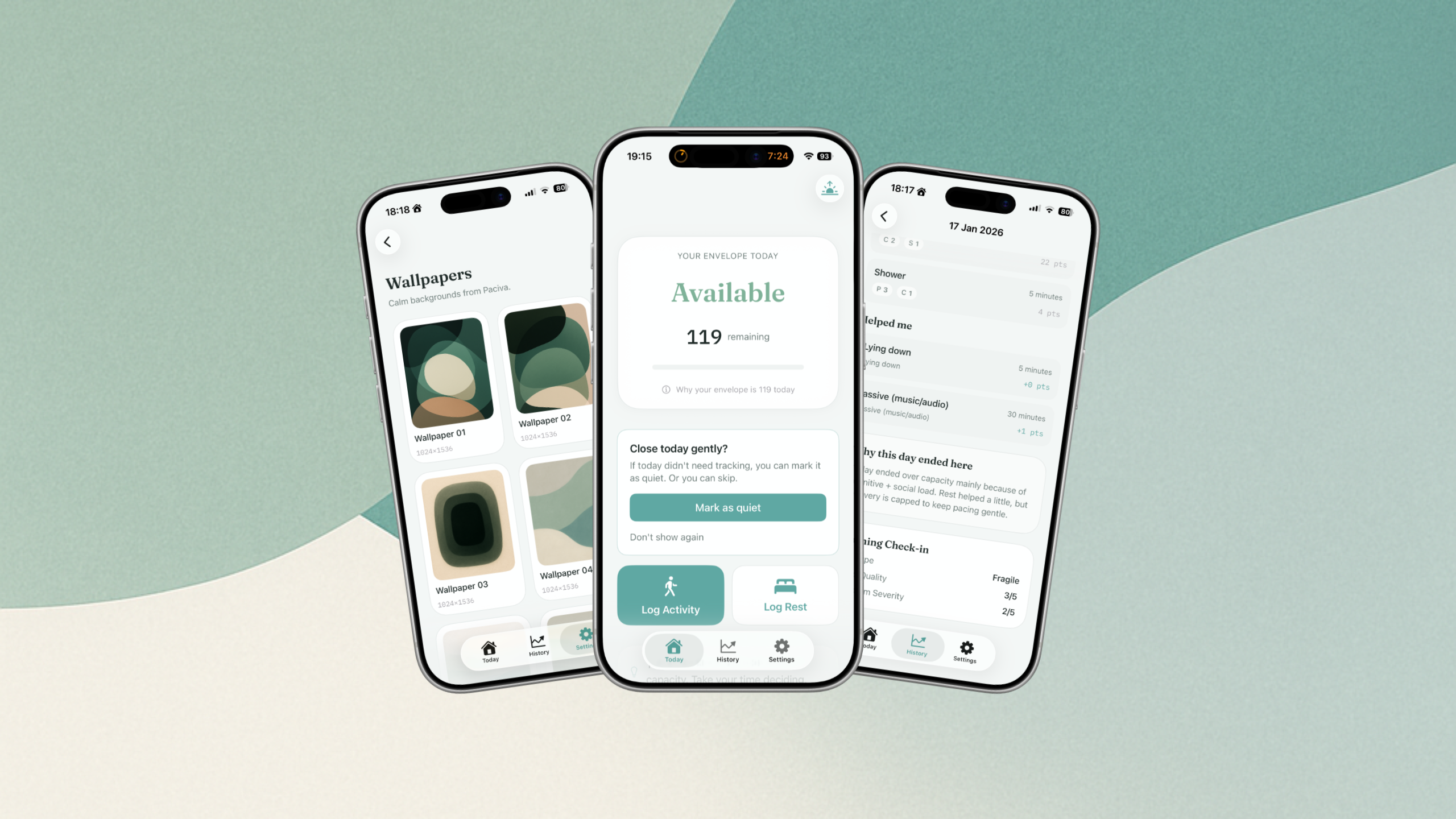
    Paciva is built around a simple metaphor: the envelope.

    Imagine that each day you’re given an envelope. Inside is your capacity for that day. You don’t know the exact amount, and it’s not the same every time. Some days it’s thick, some days it’s thin. Once it’s empty, borrowing from tomorrow comes with a cost.

    Paciva doesn’t try to tell you what you should do.

    It doesn’t try to optimize your output or gamify your behavior.

    Instead, it helps you notice:

    • how full your envelope feels today
    • what seems to spend it
    • what actually helps it recover
    • and when it might be wiser to stop

    Over time, the app gently calibrates itself to you. There’s no universal “100” you’re supposed to reach. Your envelope is personal. The numbers are just a reference — a way to make something invisible a little more visible.

    How the App Came Together

    Paciva didn’t start as a single, clear idea. It evolved through a lot of questions, discarded features, and uncomfortable realizations.

    At first, I tried to make it very specific: an app for ME/CFS, or an app for neurodivergent people. But that didn’t quite feel right. The underlying problem was the same: living with energy that can’t be trusted to replenish on demand.

    So Paciva became simpler and more honest.

    At its core, it’s just an envelope.

    Everything else — context, wording, guidance — is optional.

    You can tell the app what kind of day you’re having.

    You can log activities or rest in a very lightweight way.

    You can use widgets, quick logs, or ignore parts entirely.

    It’s intentionally not perfect. It doesn’t claim medical accuracy. It doesn’t promise optimization. It may even feel slightly “wrong” at first — and that’s okay. Paciva needs a few days to learn what your envelope looks like.

    What Paciva Is (and Isn’t)

    Paciva is a tool. Nothing more, nothing less.

    It’s not a diagnosis.

    It’s not medical advice.

    It’s not a productivity system.

    It’s something you can check in with when you’re unsure.

    Something that helps externalize a decision that’s otherwise always happening in your head.

    If it helps you rest earlier, say no sooner, or understand yourself a bit better — then it’s doing its job.

    Paciva Is Now Live

    The first public iOS version of Paciva is now available on the App Store:

    👉 Download Paciva on iOS:

    https://apps.apple.com/ch/app/paciva/id6757721216

    The app is still evolving, and it’s intentionally modest in what it promises. I’m sharing it now because I believe it’s already useful — even if it’s not finished.

    If you’d like to learn more about how Paciva works, the envelope concept, or where the app is heading, you can visit:

    👉 https://paciva.app

    Thank you to everyone who tested early versions, shared thoughts, or simply told me, “Yes — this feels familiar.”

    That was the signal I needed to release it.

  • When energy isn’t infinite

    When energy isn’t infinite

    For most of my life, I believed — quietly, unquestioned — that energy was something you could always stretch a little further.

    You get tired, you push.

    You feel overwhelmed, you power through.

    You rest later.

    That belief is everywhere. It’s baked into how we talk about work, productivity, motivation, even self-care. Try harder. Be disciplined. Recharge on the weekend.

    But that story breaks the moment energy becomes finite in a way you can’t negotiate with.

    Recently, someone very close to me was diagnosed with ME/CFS. Watching that diagnosis land was sobering in a way I wasn’t prepared for. Not just because of the illness itself, but because of how invisible it is — and how poorly our everyday systems understand it.

    At the same time, I’ve been learning to better understand myself as a neurodivergent person. And while the experiences are different, something clicked almost immediately:

    the shared reality of limited capacity.


    The myth of “just doing less”

    We often frame energy issues as a matter of balance:

    “Just do a bit less.”

    “Listen to your body.”

    “Prioritise better.”

    That advice assumes a stable baseline. It assumes that if you rest enough, things reset.

    But for many people, that’s not how it works.

    For people with ME/CFS, energy isn’t something you “run low on” — it’s something that can disappear entirely if you cross an invisible line. And the consequences don’t always show up immediately. You can feel “okay” in the moment and pay for it days later.

    For many neurodivergent people, capacity is just as real and just as fragile — but it drains in different ways. Cognitive load. Social masking. Sensory overload. Decision fatigue. You can look functional on the outside while your internal system is already maxed out.

    In both cases, the problem isn’t motivation.

    It’s systems that assume unlimited energy.


    What we’re missing: language for limits

    One of the hardest parts of both chronic illness and neurodivergence isn’t the fatigue itself — it’s the lack of shared language around limits.

    How do you explain to someone that:

    • today’s “no” isn’t emotional, it’s structural?
    • doing one small thing might mean doing nothing tomorrow?
    • rest isn’t a reward, it’s damage control?

    Without language, people default to guilt.

    Without tools, people default to guessing.

    Without understanding, people default to pushing.

    And pushing is often exactly what causes harm.


    I started building something — not to fix, but to notice

    I’m a builder by nature. When I don’t understand something, I try to map it. When something feels chaotic, I try to give it structure.

    I’m working on something right now — quietly, carefully — not because I think technology can solve chronic illness or neurodivergence, but because I think it can help us notice patterns before they hurt us.

    The goal isn’t optimisation.

    It’s permission.

    Permission to stop before things break.

    Permission to treat energy as finite — not failing.

    Permission to say, “This was enough,” without having to justify it.

    I’m building it because I’ve seen how devastating it is when limits are ignored — by systems, by workplaces, by well-meaning people, and by ourselves.

    And I’m building it because I know how hard it is, as a neurodivergent person, to trust your own internal signals when the world keeps telling you they’re wrong.


    This isn’t about doing more gently — it’s about doing less safely

    There’s a subtle but important difference.

    Many tools try to help you do more without burning out.

    What’s missing are tools that help you not burn out in the first place â€” even if that means doing less.

    That shift matters.

    It reframes rest as strategy.

    It reframes limits as information.

    It reframes “low energy” days as data, not defeat.


    I don’t have all the answers — but I know the problem is real

    I’m not writing this as an expert.

    I’m writing this as someone who’s learning — painfully, slowly — that energy is not universal, and that pretending otherwise causes real harm.

    If this resonates with you, you’re not broken.

    And if it doesn’t, I hope it still plants a seed of curiosity and empathy.

    Some people live in a world where energy refills overnight.

    Others don’t.

    It’s time our tools — and our expectations — reflected that.